
Introduction
Astrology has fascinated people for thousands of years. Many believe that the position of the stars, planets, and the Moon at the time of birth can influence a person’s personality, relationships, career, and life events. While some people follow astrology for daily guidance, others enjoy it as a way to understand themselves better. Today, astrology continues to grow in popularity through websites, mobile apps, and social media, making it more accessible than ever.
In this article, we’ll explore what astrology is, how it works, its main elements, and why millions of people continue to follow it.
What Is Astrology?
Astrology is the study of how the movements and positions of celestial bodies, such as the Sun, Moon, planets, and stars, may influence human life and natural events. It is based on the idea that the universe is connected and that the positions of these celestial bodies at the moment of birth can reveal important information about a person’s character and life path.
Different cultures have developed their own systems of astrology, including Western Astrology, Vedic Astrology (Jyotish), and Chinese Astrology. Although each system has unique methods, they all aim to provide insights into personality, relationships, and future possibilities.
The Importance of Zodiac Signs in Astrology
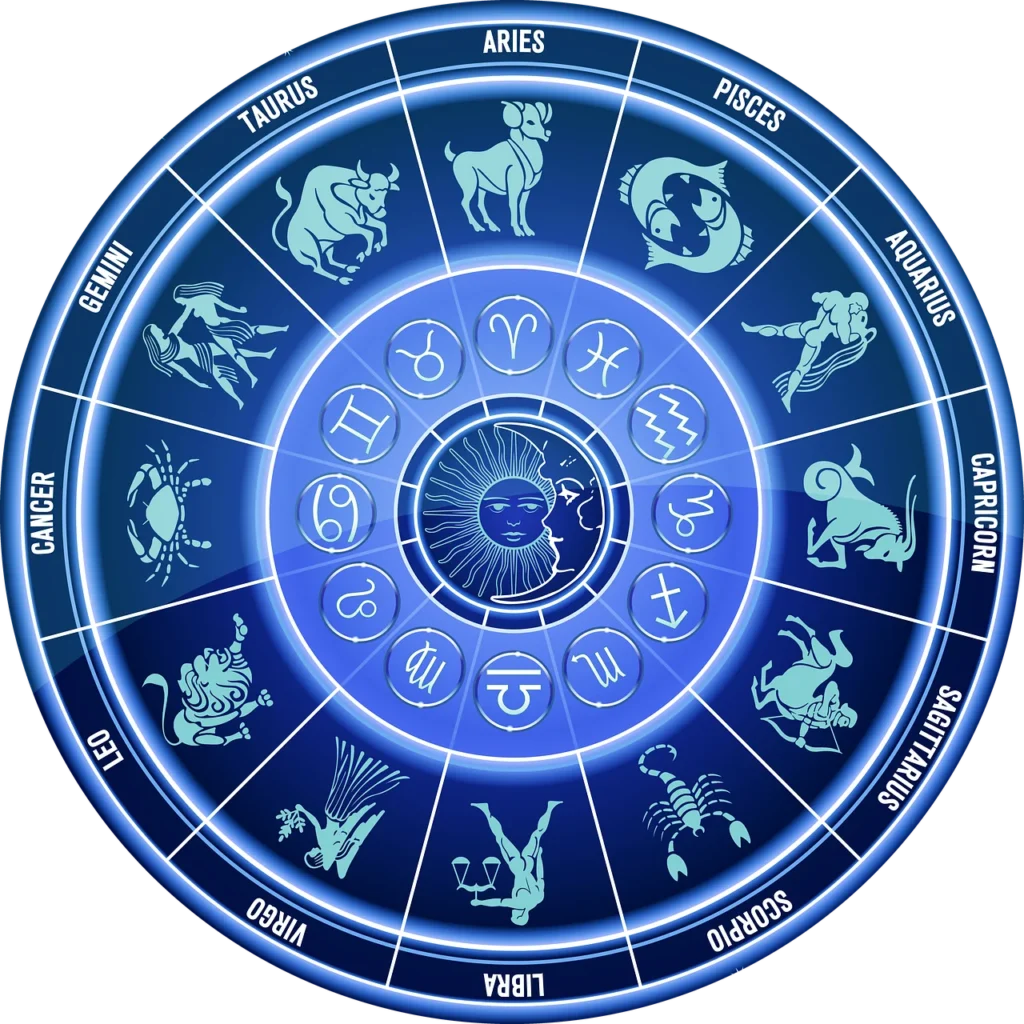
One of the most well-known parts of astrology is the zodiac. The zodiac is divided into 12 signs, each representing different personality traits and characteristics.
The twelve zodiac signs are:
- Aries
- Taurus
- Gemini
- Cancer
- Leo
- Virgo
- Libra
- Scorpio
- Sagittarius
- Capricorn
- Aquarius
- Pisces
According to astrology, your zodiac sign is determined by the position of the Sun at the time of your birth. Each sign belongs to one of the four natural elements—Fire, Earth, Air, or Water—which further influence personality traits.
How Astrology Works
To understand astrology, astrologers create a birth chart, also called a natal chart. This chart is based on three important details:
Date of Birth
The exact day you were born.
Time of Birth
The precise time helps determine your rising sign and house placements.
Place of Birth
The location helps calculate the exact positions of the planets.
Using this information, astrology creates a map of the sky at the moment of birth. Astrologers then study the positions of the planets, zodiac signs, and houses to provide guidance about different areas of life.
Benefits of Astrology
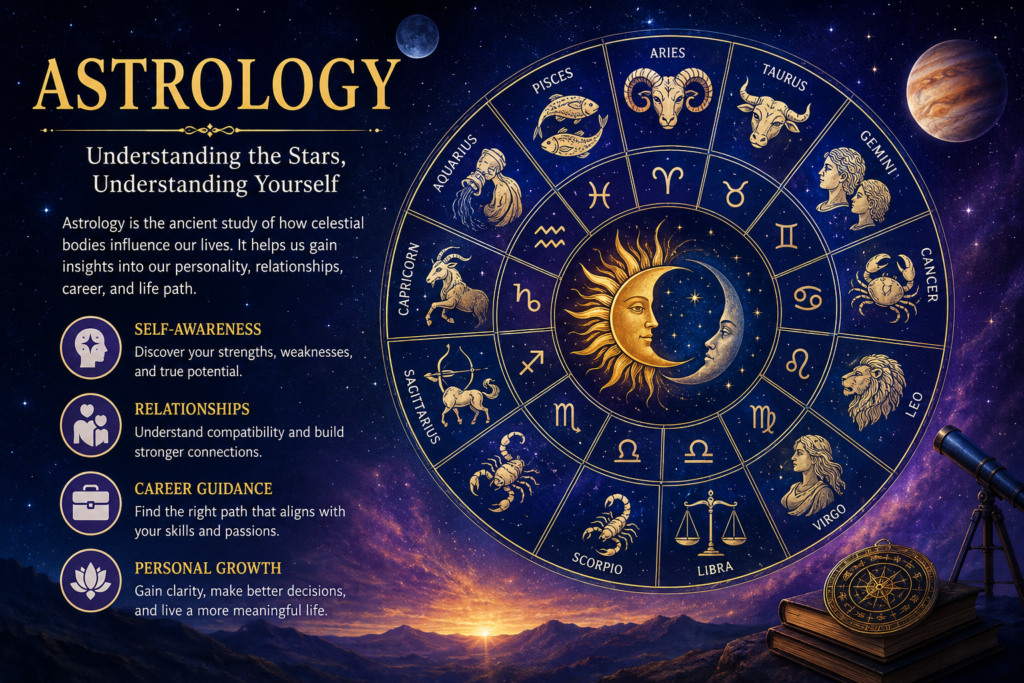
Many people turn to astrology because it offers personal insights and guidance. Some common benefits include:
Better Self-Understanding
Astrology can help people recognize their strengths, weaknesses, talents, and emotional patterns.
Relationship Compatibility
Many use astrology to understand compatibility between partners, friends, and family members by comparing birth charts.
Career Guidance
Some astrologers analyze birth charts to suggest careers that match an individual’s natural abilities and interests.
Personal Growth
Reading horoscopes or studying astrology may encourage self-reflection and motivate people to improve different aspects of their lives.
Different Types of Astrology
There are several branches of astrology, each with its own methods and traditions.
Western Astrology
This is the most popular form in Europe and North America. It focuses on the twelve zodiac signs, planetary movements, and birth charts.
Vedic Astrology
Also known as Jyotish, Vedic astrology originated in India. It uses the sidereal zodiac and places great importance on planetary periods, known as Dashas, to predict life events.
Chinese Astrology
Chinese astrology is based on a twelve-year cycle, where each year is represented by an animal such as the Rat, Dragon, Tiger, or Horse. It also considers the five natural elements.
Astrology and Daily Horoscopes
Daily horoscopes are one of the most popular aspects of astrology. These short predictions are based on the current positions of the planets and how they interact with each zodiac sign.
Many people read daily horoscopes for motivation, entertainment, or guidance before making important decisions. While horoscopes offer general advice, a personal birth chart provides more detailed insights because it is unique to each individual.
Common Misconceptions About Astrology
Despite its popularity, there are several misunderstandings about astrology.
Some people believe astrology predicts the future with complete certainty. In reality, many astrologers describe it as a tool for guidance rather than a guarantee of specific events.
Another misconception is that your Sun sign is the only thing that matters. In fact, astrology considers the Moon sign, rising sign, planetary positions, and twelve houses to provide a complete interpretation.
Is Astrology Scientific?
The relationship between astrology and science has been debated for many years. Modern scientific research has not found reliable evidence that celestial positions directly determine human behavior or future events.
However, many people still value astrology for personal reflection, emotional comfort, and spiritual exploration. Whether viewed as a belief system, a cultural tradition, or a form of self-discovery, astrology continues to inspire curiosity across the world.
Conclusion
Astrology remains one of the oldest and most fascinating systems for understanding human personality and life experiences. From zodiac signs and birth charts to daily horoscopes and compatibility readings, astrology offers many ways to explore yourself and your relationships. While it should not replace professional advice for important life decisions, it can serve as a meaningful tool for self-awareness and personal growth. Whether you’re a beginner or someone who has followed astrology for years, learning about the stars can be an enjoyable and insightful journey.